Key takeaways
• Global VAT compliance software centralizes registrations, filings, and payments instead of scattering them across regions, vendors, and spreadsheets
• Automation and embedded expertise reduce error risk, cut manual work, and improve preparedness for tax authority reviews
• A modern VAT platform supports new markets, channels, and business models without requiring tax headcount to grow at the same pace
• Treating VAT as both a risk and an opportunity helps tax, finance, and operations align on shared data, controls, and KPIs tied to long-term resilience
In short: Global VAT compliance software helps large businesses cut indirect tax risk. It replaces scattered spreadsheets, advisors, and local processes with one controlled platform. It automates data intake, VAT calculation, filing, and payment, and adds regulatory updates and expert support. Tax and finance leaders get one view of every registration, deadline, and risk across markets.
How Does Global VAT Compliance Software Reframe Enterprise Risk?
Global VAT compliance software turns VAT from a hidden, scattered risk into a controlled, data-driven system. That matters because global VAT has moved from a back-office task to a board-level concern. For a real-world example, read our Citrix case study.
VAT now appears in board decks, risk registers, and project plans for every new market launch. Cross-border e-commerce, digital services taxes, marketplace rules, EPR schemes, and e-invoicing have made indirect tax a major source of enterprise risk. Read more in our guide: Marketplace Tax Software Failure Modes and Controls for Enterprises.
Below, we look at the risks in traditional VAT processes. We then show how a modern platform changes the risk profile. Finally, we cover what tax and finance leaders should look for in a solution that supports international growth.
Why Does Traditional VAT Management Expose Hidden Enterprise Risk?
Traditional VAT management relies on a patchwork of local approaches, so risk builds up quietly. It may look manageable on the surface. Underneath, three problems grow.
First, there are fragmented processes and data silos. Local teams might:
• Work with different advisors in each country
• Use their own spreadsheets, templates, and calendars
• Pull data manually from multiple ERPs, e-commerce tools, or billing systems
This makes it hard to keep a single source of truth for taxable transactions, rates, and exemptions. The result is often duplicated work and weak controls. Group tax and finance leaders see only part of the picture.
Second, rule changes keep speeding up. Countries keep introducing:
• E-invoicing and real-time or near-real-time reporting rules
• Platform economy rules that treat marketplaces as deemed suppliers
• New thresholds, digital services reporting rules, and EPR schemes
Manual processes struggle with the different formats, deadlines, and logic in each country. Meanwhile, tax authorities use better data tools and share more information across borders. For large enterprises, gaps and delays are now more likely to be spotted.
Third, the cost of non-compliance goes far beyond penalties. It also includes:
• Interest, corrective filings, and remediation work
• Internal investigations, system reviews, and urgent advisory projects
• Challenging discussions with marketplaces, payment providers, or partners
The biggest cost is often opportunity cost. Tax teams get stuck fixing past problems. They have less time for new market entry, major integrations, or transformation programs.
How Does Global VAT Compliance Software Redefine Risk Management?
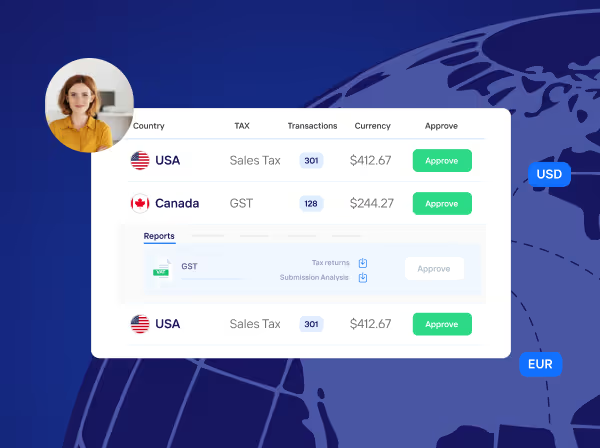
Global VAT compliance software centralizes control while keeping the local detail each country needs. It does this through one view, automation, and built-in expertise.
With a single platform, tax and finance leaders can see:
• All registrations and obligations by country and entity
• Filing calendars and workflows, with status and ownership
• Standardized processes and controls that still respect local rules
Role-based access and approval flows support internal control frameworks and audit needs. Leaders get a clearer, more consistent view across Europe, the UK, the Middle East, APAC, Latin America, and other regions.
Automation is the second key element. A robust platform connects to ERP, e-commerce, and billing systems. It then manages:
• Data ingestion and mapping, reducing manual preparation and copy-paste work
• VAT calculation and logic, including rates, exemptions, and special rules
• Filing generation, electronic submission, and payment orchestration
This cuts deadline risk and the chance of human error. It also frees tax specialists to work on high-impact issues instead of routine checks.
Embedded expertise and updates keep the system current. A strong global VAT platform is more than software. It also provides:
• Continuous regulatory updates applied to tax rules and filing formats
• Access to VAT experts for complex questions, new business models, or EPR issues
• Guidance when digital rules change or new obligations emerge
Together, technology and specialist support turn VAT from a recurring headache into a predictable, managed process.
How Can You Build a Resilient Indirect Tax Operating Model?
You build a resilient indirect tax operating model on top of a modern VAT platform, with strong governance, clean data, and shared ownership. We cover this in more detail in Enterprise Readiness for Centralized Tax Payments.
For governance, global VAT compliance software helps you set and track key risk indicators, such as:
• Error and adjustment rates by country or entity
• Late filings or payment delays
• Exception volumes and manual overrides
You can apply standard policies and controls across regions and still allow for local differences. Strong audit trails, documents, and digital evidence build confidence when tax authorities or internal audit review your filings.
Data quality is the next foundation. Clean, structured data should flow from ERP, order management, and billing systems into the VAT platform. That reduces risk at the source. The software can help flag common gaps such as:
• Missing or incorrect tax codes
• Incomplete customer location or VAT ID data
• Inadequate product classification for VAT and EPR
Better indirect tax data also supports wider analytics, from margin analysis to forecasting.
This model works best when tax, finance, and operations work together. Central dashboards show VAT metrics to CFOs, controllers, and regional leaders. Working with sales, logistics, and IT means new launches and peak periods are planned with tax in mind. Peak periods include seasonal and year-end peaks. VAT becomes a shared responsibility on a common platform. You can also read Strategic Gains From Centralized Tax Payments for Enterprises.
How Should Enterprise Risk Strategy Address VAT and EPR?
Enterprise risk strategy should map global VAT and EPR clearly into the enterprise risk framework. The board and audit committee then see the real exposure. A modern VAT platform gives hard numbers and trends for key risks. It also offers forward-looking dashboards for seasonal peaks and reporting cycles.
Leading organizations use global VAT compliance software to keep pace with the next wave of tax digitalization. More countries are adding e-invoicing, real-time reporting, and stricter platform rules. Investing early in a flexible platform helps you avoid constant rework and technical debt. Instead of carrying VAT complexity as an ongoing burden, you can build a controlled, scalable system for sustainable international growth.
Streamline Global Indirect Tax And Reduce Compliance Risk
If you are ready to simplify multi-country VAT filings and gain real-time visibility into your obligations, our global VAT compliance software is built to scale with your business. At Taxually, we centralize complex reporting so your finance and tax teams can focus on strategy instead of manual admin. Talk with our specialists to understand the best setup for your entity structure and markets, or reach out directly through contact us to get started.
How Taxually handles this
Taxually’s CrossTax handles VAT registration, VAT, OSS and IOSS returns and fiscal representation in the countries you sell into, and checks your sales data against 250+ validation rules before each filing. OneTax then pays every tax authority with one bulk payment in your chosen currency.
Related guides

Frequently asked questions
FAQs on Global VAT Compliance Software for Enterprises
1) How is global VAT compliance software different from native ERP tax modules?
ERP tax modules can handle basic tax determination and simple reports in a limited number of countries. Global VAT compliance software adds deep country-specific logic, automated filing and payment workflows, and central oversight across many entities and markets. It is designed for multi-country, multi-channel complexity rather than only core accounting needs.
2) What is the typical implementation timeline for a large enterprise?
Timelines depend on existing systems and scope, but many large businesses follow a phased approach. High-risk or high-volume markets go live first, followed by other countries. The number of ERPs, sales channels, and filings in scope all influence how long implementation takes.
3) How does this software handle constant regulatory changes across countries?
Specialized global VAT platforms monitor rule changes and update tax logic, filing formats, and workflows centrally. Your team then benefits from those updates within the normal process, instead of tracking and implementing each country-specific rule independently.
4) Can global VAT compliance software support EPR and other non-VAT obligations?
Many modern platforms extend to related obligations such as EPR. This can include registrations, reporting, and fee calculations across multiple markets. Managing VAT and EPR together provides a more complete view of indirect regulatory risk and cost.
5) What internal resources are required to successfully adopt this software?
Most enterprises establish a cross-functional team. Tax defines rules and validates outputs, IT supports integrations and security, and finance and operations help align processes. With a vendor that combines technology and expert support, internal teams can focus on design decisions and testing rather than building functionality from the ground up.