Key takeaways
- Automating VAT saves time and money: VAT software streamlines reporting, reducing manual work and lowering compliance costs.
- Stay accurate and compliant: Automated systems ensure calculations follow the latest VAT rules, minimizing errors and penalties.
- Boost efficiency and visibility: Real-time data access and audit-ready records improve decision-making and overall productivity.
In short: Automating VAT compliance with tax software makes your VAT calculations and returns more accurate and saves time and money. VAT software also gives you real-time sight of what you owe and scales as you grow. It lowers your risk of penalties, keeps an audit trail and protects your financial data.
VAT rules change often, rates vary and reporting is complex. If you manage VAT compliance by hand, this can lead to errors, wasted time and penalties. Automation lets you simplify how you calculate and report VAT. In this post, we look at eight reasons to use tax software to automate your VAT obligations. Related reading: How Tax Software Can Simplify Your Online VAT Payments.
How does VAT automation improve accuracy and compliance?
VAT automation improves accuracy because the software does complex VAT calculations for you, which cuts the risk of human error. That is one of the main benefits of automating VAT compliance. VAT return software helps you follow the latest VAT rules and VAT schemes. It lowers the chance of costly mistakes that can lead to penalties or audits. Read more in our guide: 9 Reasons Global Businesses Should Automate Their VAT Compliance.
How much time and money can VAT automation save?
VAT automation saves time and money by letting you finish tasks in a fraction of the time it would take by hand. Manual VAT compliance takes a lot of time and effort, especially if you handle many transactions. With tax software, you can put your resources into growing your business instead. We estimate you can save between 50% to 80% in time and costs through automation.
How does VAT software boost efficiency and productivity?
VAT return software boosts efficiency by removing repetitive tasks. It processes large amounts of data quickly and accurately, so your team can focus on work that adds more value. Routine jobs like data entry, VAT calculation and reporting run automatically. Your team can then spend time on things like analyzing financial data and spotting trends.
What real-time visibility does VAT automation give you?
VAT automation gives you real-time visibility of your tax obligations. You can see up-to-date details of your VAT reporting and liabilities, including amounts due and VAT return deadlines. With this view, you can make informed decisions, plan your cash flow better and reduce risks.
Can VAT software scale as your business grows?
Yes. VAT software scales and adapts as your business grows. VAT compliance gets more complicated as you grow or enter new markets. Whether you have many customers or deal with several tax jurisdictions, tax software can handle the workload. It does this without losing accuracy or speed. For a closer look, see 7 Benefits of Automating Your Sales Tax Compliance.
How does VAT automation reduce the risk of non-compliance?
VAT automation reduces the risk of non-compliance by keeping your business in line with VAT rules at all times. VAT rules keep changing, and it can be hard to keep up. If you break VAT reporting rules, you may face penalties, fines or even legal action. By lowering this risk, VAT return software gives you peace of mind. It also protects your business from financial and reputational damage.
How does VAT software help with audit trails and documents?
VAT software keeps all your VAT records in one central place, so you have a full audit trail ready for a tax audit. A complete audit trail is crucial if you are audited. Manual record-keeping can be clumsy, which makes it hard to find and organize the documents you need. With tax software, you can easily access and present the right documents during audits.
How does VAT software protect your data?
VAT return software protects your data with strong security measures. These include encrypted data storage, user access controls and regular backups. Data security is a top concern for businesses today. By protecting sensitive financial information, you lower the risk of data breaches and unauthorized access.
Is VAT software mandatory?
In some countries, yes. In the UK, Making Tax Digital for VAT requires all VAT-registered businesses to keep records digitally, unless they are exempt. They must use functional compatible software to keep those records and send VAT returns to HMRC.
Data must also move between programs by digital links. Copying figures by hand from one program to another is not allowed. See HMRC's VAT Notice 700/22 for the full rules.
The EU is moving the same way. Under the VAT in the Digital Age (ViDA) package, real-time digital reporting based on e-invoices will apply to cross-border B2B transactions from 1 July 2030.
What should you look for in VAT compliance software?
Look for software that covers every country where you have VAT obligations, not just your home market. Use this checklist:
- Up-to-date rules: VAT rates and rules are kept current for each country.
- Data connections: It imports data from your marketplaces, webshop and accounting system, so nobody re-keys figures.
- Filing: It prepares returns in the format each tax authority requires, including OSS returns if you sell to EU consumers.
- Deadlines: It tracks filing and payment dates by country.
- Records: It stores returns and source data, ready for an audit.
- Security: It offers access controls, encrypted storage and backups.
How does automated VAT compliance work in practice?
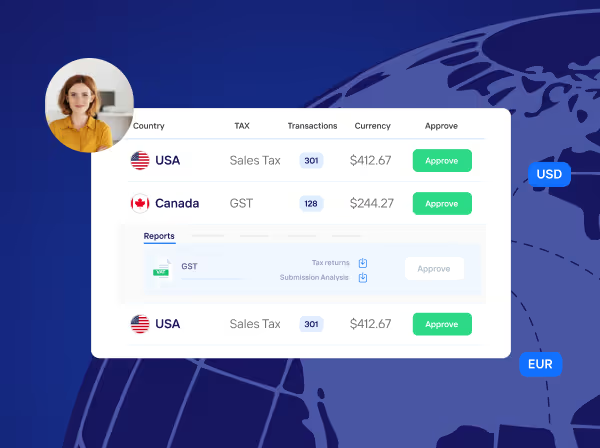
- Sales and purchase data flows in from your sales channels and accounting system.
- The software applies the right VAT rate to each transaction, based on the product and the place of supply.
- It builds the VAT return for each country and period.
- You review and approve the figures.
- The return is filed, and you pay the VAT due before the deadline.
Conclusion
Using tax software for your VAT calculations, VAT returns and more gives your business real advantages. Automation improves accuracy, compliance and efficiency, and it saves time and money. It also cuts the risk of errors and penalties. With the right technology, you can work more efficiently, see more clearly and adapt as VAT rules change.
Do you need help with your VAT compliance? Book a free call with one of our VAT experts to find bespoke solutions for your business, optimize your VAT costs, and reach millions of new potential customers.
How Taxually handles this
Taxually’s CrossTax handles VAT registration, VAT, OSS and IOSS returns and fiscal representation in the countries you sell into, and checks your sales data against 250+ validation rules before each filing. OneTax then pays every tax authority with one bulk payment in your chosen currency.
Related guides

Frequently asked questions
What is VAT automation and how does it work?
VAT automation uses specialized tax software to handle VAT calculations, reporting, and submissions automatically. It eliminates manual data entry, applies the correct VAT rates, and ensures compliance with current regulations in real time.
Why should I use tax software for VAT compliance?
Using VAT return software improves accuracy, reduces human error, and ensures you meet VAT filing deadlines. It also saves time and money by automating repetitive tasks, freeing up your team to focus on core business operations.
Can VAT automation help my business stay compliant with changing tax laws?
Yes. Automated VAT systems are regularly updated with the latest tax rules, ensuring your business stays compliant across multiple jurisdictions. This minimizes the risk of penalties and errors due to outdated information.
Is VAT automation suitable for growing or international businesses?
Absolutely. VAT automation software is scalable, meaning it can easily adapt to increased transaction volumes and new tax jurisdictions as your business expands globally. It’s particularly valuable for ecommerce and multinational companies.
How does VAT automation improve security and audit readiness?
Tax software stores all VAT records in one secure, encrypted system. It creates a full audit trail, making it easier to retrieve documents during audits and protect sensitive financial data from unauthorized access.