Key takeaways
- Marketplace facilitator rules can shift tax collection from seller to platform in many countries and US states, but not in every scenario
- Sellers still own key obligations such as registrations, VAT and sales tax filings, B2B and exemption handling, and environmental fees
- A responsibility matrix by channel and region helps prevent double taxation and under-collection
- Contracts, internal policies, and system settings should align with facilitator rules and local tax law
- Automation and centralized data improve control, visibility, and audit trails across channels and regions
In short: A marketplace facilitator is the platform that hosts the sale and runs checkout. A direct seller is the brand or merchant supplying the goods. In many US states, the EU and the UK, the marketplace must collect tax on certain sales. Direct sellers still handle registrations, B2B sales, their own channels and environmental fees.
How Can Marketplace Tax Rules Become a Growth Advantage?
Marketplace tax rules become a growth advantage when everyone knows who is responsible for which tax, and where. The rules can feel complex, but they should not slow your brand down. If you sell across Amazon, Walmart, eBay, Shopify, TikTok Shop and your own site, tax affects almost every order. Getting this clear is essential planning before busy seasons. For a closer look, see Questioning Centralized Tax Payments for Enterprise Liquidity.
Q1 is often reset season: inventory, campaigns, new channels and new countries. It is also the right time to check that your marketplace tax settings, legal terms and internal systems match how you sell today. If you skip this, peak events like Prime Day, back-to-school and Black Friday can magnify hidden issues inside large order spikes.
If you get responsibility wrong, you risk double tax, missing tax, marketplace penalties and audits. With clear roles, strong data and automation, marketplace tax compliance becomes an enabler of safe growth. You can also read Marketplace Tax Software Failure Modes and Controls for Enterprises.
What Is the Difference Between a Marketplace Facilitator and a Direct Seller?
A marketplace facilitator is the platform that hosts the sale, runs checkout, and often handles payments and sometimes fulfillment. A direct seller is the brand or merchant supplying the goods. In many jurisdictions, the marketplace facilitator must collect and remit tax on certain sales.
Rules vary by location:
- US: state-level marketplace facilitator laws with different thresholds and details
- EU and UK: VAT deemed supplier rules in certain cases
- Other regions: local marketplace rules layered onto domestic tax systems
Mixed responsibility is now common:
- Marketplace collects tax on B2C domestic orders, while you handle B2B
- Marketplace is responsible for low-value imports to consumers, while you handle higher value orders
- Marketplace collects only on its own site, not on DTC, wholesale, or other channels
Rules also change often, including thresholds, value limits and new regimes. A one-time setup or a spreadsheet is risky. Keep an updated map of responsibilities, and use systems that support ongoing rule changes.
How Do You Map Marketplace Tax Compliance Across Channels?
You map marketplace tax compliance with a simple matrix that shows who handles tax on each channel. After defining roles, answer these questions for every channel:
- Who calculates tax on this channel?
- Who collects and who remits tax?
- Where is the marketplace the tax collector, and where are we?
- Who reports each sale type in which return?
Include:
- Amazon, Walmart, eBay, Etsy
- Shopify and other carts
- Own website and mobile app
- Wholesale and B2B portals
- Social commerce like TikTok Shop
This quickly exposes blind spots, especially when:
- You add direct website sales into new states or EU countries
- You sell to businesses with VAT IDs or tax exemption certificates
- Products trigger environmental or packaging fees in certain regions
Seasonal spikes can push you over nexus thresholds in new US states. They can also push you over VAT registration thresholds in new countries. Both require fast registrations and filings.
Automation helps by bringing together marketplace reports, direct sales data and cross-border VAT positions. Teams can then see what is collected where, and which returns and payments are due.
How Do You Split Tax Responsibilities Without Gaps?
You split tax responsibilities without gaps by using your channel map to fix gaps and overlaps. Start with legal and commercial terms, so that marketplace agreements and local law align on:
- Supplier of record for each sale type
- Responsibility for tax collection and invoicing
- Audit risk and required data retention
Then set clear internal rules:
- When the marketplace is the tax collector, our systems should not add tax again
- For B2B sales or exempt buyers, our systems may need separate tax logic
- For DTC channels, we own tax trigger points, registrations, and filings
Double taxation happens when both the marketplace and the seller charge tax on the same order. Under-collection happens when each assumes the other covered it. To prevent both:
- Reconcile marketplace invoices and tax reports against internal data
- Check tax settings in each cart and ERP against legal rules
- Spot-check high-risk flows like cross-border sales and low-value imports
Consistent reporting is the control point. Tax collected, reported and paid should align across marketplaces, ERP and accounting, so it stands up under audit.
How Do Global VAT, US Sales Tax, and Environmental Fees Differ for Marketplaces?
Marketplace tax responsibilities differ by region:
- US: marketplaces often collect and remit sales tax on marketplace orders; sellers still handle tax on DTC, wholesale, and other channels
- EU and UK: deemed supplier rules can make platforms responsible for VAT on certain B2C cross-border or low-value imports. Sellers often still need VAT registrations and returns, and may use OSS or IOSS
- Other regions: local rules determine when platforms are treated as suppliers/collectors versus when sellers remain responsible
Beyond VAT and sales tax, environmental and product-based fees may apply (EPR, packaging waste fees, battery/electronics charges). Marketplaces may help with limited reporting, but the brand is often still liable.
Here is a common setup. A brand sells through Amazon FBA in multiple countries and through its DTC site. Often:
- Amazon collects VAT or sales tax on certain marketplace orders
- The brand still registers for VAT or sales tax where required
- The brand files returns and pays amounts due for DTC and other channels
- Environmental and packaging obligations remain with the brand
Centralizing registrations, calculations, filings and payments in one tax platform helps you keep a consistent view as you add marketplaces and expand into new regions.
How Does Compliance Clarity Lead to Confident Growth?
When responsibilities are clear, tax supports growth instead of slowing it down. A practical action list:
- Audit every sales channel and region and update the responsibility matrix
- Clarify supplier roles and marketplace responsibilities in contracts and internal rules
- Standardize handling for B2C, B2B, and exempt buyers across systems
- Connect marketplaces, carts, and accounting into a single tax technology stack
With this foundation, it is safer to launch into new markets, test new channels and run peak-season campaigns. Teams spend less time chasing settings and spreadsheets, and more time on execution.
Take Control of Your Marketplace Tax Compliance
At Taxually, we help make marketplace tax compliance centralized and scalable. When VAT, sales tax, and environmental fees are managed in one place, brands can move faster across channels while staying compliant where they sell. Read more in our guide: Marketplace Seller Tax Operating Model: SoR vs. FoR Across Marketplaces.
If you sell across multiple platforms, marketplace tax compliance does not need to be overwhelming. Taxually helps automate the heavy lifting so you can focus on growth. Share your current setup and we will recommend an approach that fits your channels and volumes. Contact us to speak with our team.
How Taxually handles this
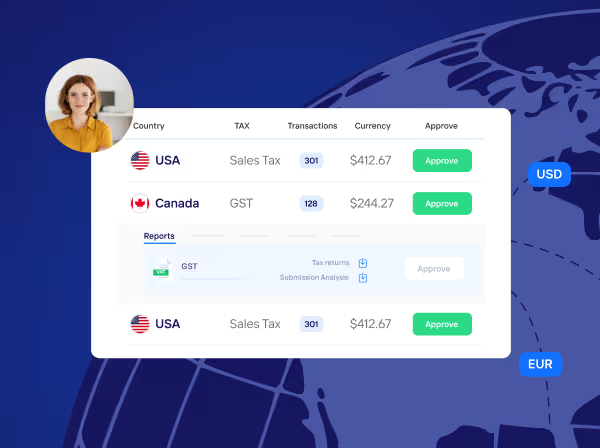
Taxually’s LumaTax runs a nexus analysis on your sales, helps you register in the states where you must collect, and prepares and files multi-state sales tax returns, including Canadian GST/HST. LumaTax is currently available to enterprises and accounting firms. For the full workflow, read how to automate US sales tax filing in every state.
Related guides

Frequently asked questions
How do marketplace facilitator rules change my tax responsibility as an enterprise seller?
They typically shift the obligation to calculate, collect, and remit tax on qualifying marketplace transactions from the seller to the platform. This can reduce tasks for specific orders, but it does not remove the need for registrations, returns, or strong controls. You still need visibility into where the marketplace is the tax collector and how marketplace-collected tax aligns with your filings across regions and entities.
If a marketplace is collecting tax, do I still need VAT or sales tax registrations?
Often, yes. Marketplaces may collect tax on certain B2C or low-value transactions, while you remain responsible for B2B sales, higher value imports, or sales on your own channels. You may also need registrations for warehousing, local invoicing, or non-marketplace sales. Determine this country-by-country and state-by-state, not based on marketplace policy alone.
How should larger organizations handle B2B transactions and exemptions across marketplaces?
Most facilitator regimes focus on B2C, so B2B and exempt sales often fall to the seller. Larger organizations need a consistent policy to validate VAT IDs, exemption certificates, and customer status across channels, supported by ERP and commerce integrations. Maintain audit-ready evidence and separate B2B vs. B2C flows in reporting so marketplace-collected tax is not mixed with your obligations.
What risks do enterprise sellers face if marketplace and internal tax data do not match?
Misalignment can cause double taxation, under-collection, misreported revenue, and audit exposure. For groups with multiple entities, it can also disrupt reconciliation, group reporting, and cash flow planning. Control this with regular reconciliations, exception reporting, and consistent tax coding across marketplaces, ERP, and accounting.
How can automation support marketplace tax compliance at enterprise scale?
Automation standardizes calculations, consolidates data, and keeps rules up to date. A central tax platform can connect marketplaces, carts, ERPs, and accounting tools, applying the right rules by country, state, channel, and customer type. This reduces manual work, improves accuracy, and creates an audit trail, while making it easier to onboard new marketplaces and expand into new regions.