Key takeaways
- Ecommerce tax compliance is a growth system, not admin. When handled strategically, it reduces risk, supports faster market entry, and strengthens investor confidence.
- Your tax footprint follows customers, inventory, and volume. VAT, GST, and US sales tax obligations are driven by where you sell, where goods are stored and shipped from, and when thresholds are exceeded.
- Most problems come from fragmented data and manual workarounds. Spreadsheets, stitched exports, and rushed filings create compounding errors and missed deadlines as order volume scales.
- A scalable framework combines centralization, automation, and expert support. Real-time calculation, threshold monitoring, standardized filing workflows, and coordinated payments help turn compliance into a predictable process.
Turning Ecommerce Tax Compliance Into a Growth Advantage
Ecommerce tax compliance is rarely the reason anyone starts a brand, but it quickly becomes one of the biggest factors in whether international growth stalls or scales. When tax is treated as an afterthought, high‑growth brands run into blocked marketplace listings, surprise back tax bills, and awkward conversations with investors about risk. When it is handled strategically, it becomes a quiet engine that supports fast expansion into new markets with fewer surprises.
In this article, we at Taxually want to unpack what ecommerce tax compliance really means for fast-scaling brands, marketplaces, and their partners. We will look at the triggers that create tax obligations, the most common pitfalls we see, and how automation, centralization, and expert support can turn tax from a drag on growth into a source of confidence.
What Ecommerce Tax Compliance Really Means Today
For modern ecommerce brands, tax compliance covers a mix of indirect taxes, mainly VAT, GST, and US sales tax. These obligations are tied less to where you are based and more to where your customers live, where your goods are stored and shipped from, and how much you sell into specific regions or states. As you expand channels and countries, your tax footprint grows in ways that are easy to underestimate.
There are several moving parts that need to work in sync:
• Registration, getting tax IDs where you have an obligation
• Calculation, applying the correct rates to each transaction
• Collection, actually charging and recording the tax from customers
• Filing, preparing and submitting regular returns
• Payment, remitting what you owe to each authority on time
If any of these links are weak, gaps appear. You might be registered but calculating the wrong rates. You might be collecting correctly but missing filing deadlines. Marketplaces and social platforms have also changed the rules by taking on some obligations themselves, while still expecting sellers to manage other pieces.
Compliance for ecommerce is now continuous and data-driven. It is not a once‑a‑year conversation with an accountant. It is a system that needs to keep pace with order volume, product changes, and frequent policy updates across multiple jurisdictions.
Key Triggers That Create Tax Obligations for High‑Growth Brands
As brands grow, tax obligations often appear sooner than expected. Common triggers include economic thresholds, where exceeding a certain sales volume in a state or country creates a requirement to register and collect tax, and physical presence, such as offices, staff, or inventory.
In ecommerce, there are some specific patterns that matter:
• Holding inventory in third‑party warehouses or fulfillment centers in another region
• Cross‑border shipping from multiple locations, not just your home country
• Rapid sales spikes from influencer campaigns, flash sales, or peak seasons
• Expansion to new marketplaces or social commerce platforms that open new regions overnight
Different business models change where tax is due. A direct‑to‑consumer brand shipping from one country into many may face different obligations than a seller storing inventory locally in various markets, or a dropshipper using suppliers in multiple regions. Hybrid setups, where you sell on your own site and through marketplaces, add another layer, because some platforms operate as deemed suppliers for tax purposes in certain regions but not in others.
Ignoring these triggers does not make them go away. Instead, it can lead to back taxes, fines, and interest, platform suspensions if marketplaces identify issues, and real damage to brand and valuation when investors conduct tax due diligence.
Common Tax Compliance Pitfalls in Fast‑Growth Ecommerce
What gets most high‑growth brands into trouble is not a lack of effort, but the way their systems are set up. Data is usually scattered across ecommerce platforms, ERPs, fulfillment partners, and payment providers. When information is fragmented, it is hard to get a single source of truth for which taxes were charged, in which jurisdiction, and for which products.
We often see teams relying on fragile manual processes, such as:
• Spreadsheets maintained by one or two key people
• Ad‑hoc exports from multiple platforms stitched together every filing period
• One‑off registrations and filings handled in a rush as new markets open
Common mistakes in this setup include misclassifying products so reduced or zero rates are missed, applying outdated tax rates, misunderstanding marketplace facilitator rules about who must collect tax, and missing filing deadlines when volumes increase. Each individual error might seem small, but they compound quickly.
The result is operational drag. Instead of focusing on growth, leadership and finance teams end up reacting to audit notices, queries from tax authorities, and marketplace compliance alerts. That reactive posture is stressful, expensive, and distracting for everyone involved.
Building a Scalable Ecommerce Tax Compliance Framework
To support serious growth, ecommerce brands need a framework that treats tax as a core system, not a side project. At Taxually, our view is that this starts with a centralized architecture that unifies global VAT and US sales tax data, registrations, filings, and payments in one place. When all jurisdictions and channels feed into a single environment, patterns and gaps become visible quickly.
Automation should carry as much of the operational burden as possible:
• Real‑time rate calculation based on product, customer location, and channel
• Threshold monitoring that flags when registration obligations are approaching
• Standardized filing workflows for each country or state
• Payment orchestration that manages deadlines and currencies in one calendar
Technology is only part of the answer. Indirect-tax rules are nuanced, and they change often. Expert support is critical to interpret new regulations, decide when and where to register, manage complex special cases, and shape your market entry strategy. This combination of automation and human insight is what turns tax compliance from guesswork into a predictable process.
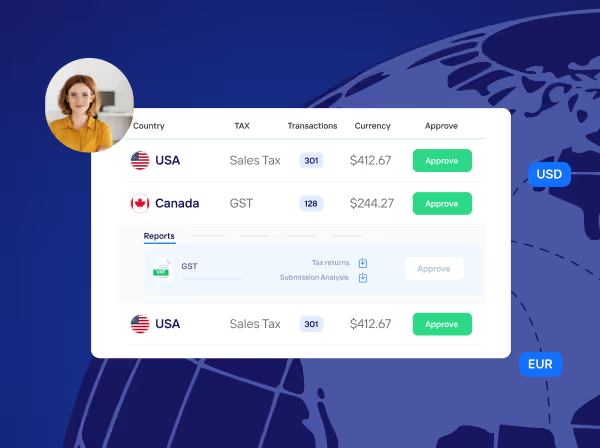
Integrating tax technology directly with ecommerce platforms, marketplaces, accounting tools, and fulfillment partners closes the loop. Data flows in automatically, filings are based on complete transaction records, and you gain real‑time dashboards that show you where you are compliant and where action is needed. That level of visibility is what creates audit‑ready records and calmer reporting cycles.
Turning Compliance Into Confidence and Global Expansion
When ecommerce tax compliance is treated as a core growth system, the benefits show up quickly. You reduce the risk of painful surprises, build trust with platforms and partners, and move faster into new markets because you already have a playbook for registration, calculation, filing, and payment. Investors and acquirers also tend to view strong tax processes as a sign of maturity.
The practical next step is an honest assessment of how you currently manage tax. Map where your data lives, how you monitor thresholds, how many manual steps are involved in each filing, and where you rely on individual knowledge instead of documented processes. From there, you can prioritize better automation, tighter integrations, and the right level of expert guidance so your next growth wave is supported by tax compliance that is ready for it.
Make Ecommerce Tax Compliance One Less Thing to Worry About
If keeping up with changing rules and cross-border filings is slowing your growth, we can help streamline every aspect of ecommerce tax compliance. At Taxually, we combine automation with expert guidance so you can stay compliant while focusing on sales and operations. Talk to our team about your specific setup, from marketplaces to your own storefronts, and we will help you find a smarter path forward. Ready to move faster with fewer tax headaches? Simply contact us to get started.

Frequently asked questions
What taxes does “ecommerce tax compliance” usually cover?
For fast-growing online brands, it typically means indirect taxes: VAT and GST internationally, and US sales tax at the state level. The complexity comes from the fact that obligations are tied to where customers are, where inventory sits, and how you sell across channels, not just where your business is incorporated.
When do we actually need to register for VAT or US sales tax?
Usually when you hit a trigger such as an economic threshold (sales volume/value into a country or state), or a form of physical presence (like holding inventory in a third-party warehouse or fulfilment centre). Growth spikes, new marketplaces, and cross-border fulfilment models can create obligations much earlier than teams expect.
If marketplaces collect tax, are we still responsible for anything?
Often, yes. Some platforms act as a marketplace facilitator/deemed supplier in certain jurisdictions and handle parts of collection, but sellers may still have responsibilities elsewhere (such as registration, reporting, or tax treatment on non-marketplace sales). The risk is assuming “the marketplace has it covered” without validating what applies to your channels and locations.
What are the most common mistakes you see in fast-growth brands?
The biggest issues usually trace back to process and data: scattered transaction records across platforms and partners, manual filing prep, product misclassification (missing reduced/zero rates), applying outdated rates, and missing deadlines as volumes increase. Each one looks small in isolation, but together they create operational drag and audit exposure.
What does a scalable compliance setup look like in practice?
A scalable model brings registrations, calculation, filings, and payments into a centralized approach, supported by automation (real-time rates, threshold monitoring, standardized filing workflows, and a single payment calendar). Just as importantly, it includes expert oversight to interpret changing rules, handle edge cases, and guide expansion decisions so compliance stays aligned with growth.