Key takeaways
Here is a quick snapshot of what we cover:
- What centralized tax payments are: a full operating model, not just one big payment file
- Why now: rising real-time reporting, tighter enforcement, and demand for a single source of tax truth
- Core readiness pillars: data and systems, process and governance, people and operating model
- How to design an architecture that fits complex ERP and commerce stacks
- Where specialized technology platforms can help reduce risk and speed up execution
This is most helpful if you are a tax, finance, or shared services leader in a multinational business, especially if you are thinking about ERP changes, shared service center growth, or a new tax operating model in the next year or so. By the end, you should be able to:
- Assess your current maturity and pain points
- Spot gaps in data, process, and people
- Shape a realistic roadmap from pilot to global rollout
- Understand what to look for in technology and expert partners
In short: Centralized tax payments bring tax data, calculations, filings and payments for VAT, sales tax and EPR into one connected operating model. Central teams set standards, controls and technology, while local teams review and sign off. Before you centralize, check your readiness across data and systems, process and governance, and people. Then start with a small pilot.
How Can Tax Complexity Become a Strategic Advantage?
Tax complexity becomes a strategic advantage when you run indirect tax as one connected process. Global indirect tax is getting harder, not easier. VAT, sales tax, and EPR rules keep shifting, and more countries expect near real-time data and digital reporting. For large enterprises, that pressure lands on tax, finance, IT, and shared services all at once.
When tax work sits in different teams, systems, and spreadsheets, things slow down. Audit risk goes up, cash-flow planning is fuzzy, and entering new markets feels heavier than it should. This is especially painful around mid-year planning and financial close, when leaders want clear numbers and simple answers.
Centralized tax payments give a different way to run indirect tax. Instead of scattered processes and one-off fixes, they bring data, calculations, filings, and payments into one connected model. Below, we explain what that really means and how to check your readiness. We also show how to build a scalable setup that supports growth instead of blocking it.
Why Are Centralized Tax Payments Now a C-Suite Priority?
Centralized tax payments are now a C-suite priority because rules, enforcement and cash planning all demand one trusted view of tax. Regulators are moving fast toward continuous transaction controls and digital audit trails. Many countries now expect e-invoicing, online VAT reporting, and near real-time insight into cross-border sales. A spreadsheet-based, country-by-country setup simply cannot keep up with that kind of pace and detail.
At the same time, enforcement has sharpened around:
- VAT fraud and missing trader schemes
- Marketplace and platform liability
- New and growing EPR programs
- Cross-border B2C and marketplace sales
CFOs and tax leaders need one version of tax truth that they can trust for every region.
On the business side, tax payments hit working capital and cash planning directly. When each region runs its own returns and payments, common issues appear:
- Duplicate work and re-keying of data
- Different tax positions on similar flows
- Poor visibility for treasury on timing and amounts
- Slow responses during audits and reviews
Centralization helps smooth these spikes. Linking readiness work to mid-year strategy cycles and budget planning gives room for design, testing, and phased rollout. Groups that move early are better set for new rules, mergers, and new market entries that will keep coming.
What Are Centralized Tax Payments for Global Enterprises?
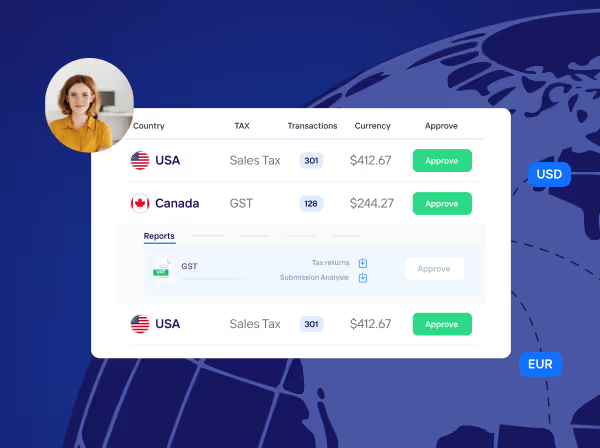
Centralized tax payments are not just about sending one large payment file from head office. They are about a connected operating model that brings together:
- Data ingestion
- Tax calculation and validation
- Filing across all required channels
- Payment execution and tracking
In a mature setup, there is central oversight, often through a global tax center or shared service hub. Local teams still play clear roles in review and sign-off. Central teams handle standards, controls, and technology. Local teams focus on local rules, special cases, and final approvals.
A strong centralized payments framework usually includes:
- Data feeds from ERPs, billing tools, eCommerce, and procurement
- Standard tax determination rules for VAT, sales tax, and EPR
- Automated preparation and submission of returns where e-filing is available
- Payment workflows that send money through the right bank accounts on time
- Controls like approvals, exception queues, and audit trails
- Dynamic calendars that track due dates worldwide
Tax technology platforms typically sit at the core of this model. The right solution connects registrations, reporting obligations, and payments on one global platform. Built-in expert support helps keep local rules correct while the overall model stays centralized and consistent.
How Do You Assess Readiness and Build a Scalable Architecture?
You assess readiness by checking your data and systems, your processes and governance, and your people. Before launching a big centralization project, it helps to be honest about where you are.
On data and systems, ask:
- Can we easily pull all the data we need from every ERP and source system?
- Is tax data coded in a standard way, or does each country use its own logic?
- How many manual handoffs or offline files sit between invoice and return?
Fragmented systems and custom local tools can break centralized flows if they are not mapped and cleaned up first.
On process and governance, map how things work today:
- Who calculates tax and at what point in the process?
- Who prepares the return, who reviews it, and who clicks submit?
- Who triggers the payment and who signs off on it?
- What happens when numbers do not match or data is missing?
Clear ownership between tax, finance, IT, and shared services is key. Escalation paths should be simple and known.
On people and operating model, look at skills and structure:
- Do we have tax staff who understand both global rules and technology?
- Are there data and process specialists who can support tax, not just finance?
- Would a fully centralized, regional, or hybrid setup fit our culture and scale best in the next 12 to 24 months?
Once you understand your starting point, you can design the centralized architecture. Strong designs share a few ideas:
- One single source of tax truth, even with many ERPs
- Configurable rules so new markets and products are easy to add
- Modular services that plug into existing ERPs and finance tools
- Resilience for peaks like quarter-end and seasonal spikes
Technology integration options include real-time APIs, prebuilt connectors to common ERPs and platforms, and scheduled batch uploads where systems are older. Automated validation, rules engines, and pre-built filing workflows cut manual work and lower error risk.
Controls must sit inside the platform, not just in email chains, and should cover:
- Multi-level approvals by role and region
- Segregation of duties between data prep, review, and payment
- Real-time dashboards that show status by country, tax type, and date
- Full logs of who did what, when, and with which data set
This kind of setup gives auditors and regulators clean, clear evidence without last-minute scrambles.
What Does an Implementation Roadmap Look Like in Practice?
A practical roadmap usually starts small and builds up. Many groups pick a pilot such as:
- One region with higher VAT volumes and decent data quality
- One tax type such as EU VAT or US sales tax
- One shared service center that already handles some tax tasks
It also helps to line up timelines with existing internal change plans, like ERP upgrades or finance transformation work, so you move systems and tax together.
Stakeholders you need on board include tax, finance, treasury, IT, shared services, and key local country teams. Each group cares about slightly different things: risk, speed, control, user experience, and support. Training and communication work best when they stress fewer surprises, fewer manual steps, and clearer roles.
To keep progress on track, set KPIs such as:
- On-time filing and payment rates
- Error or adjustment rates by country
- Manual touchpoints per return
- Cycle time from period end to payment
- Audit findings and follow-up workload
These measures show where the process works and where you need to adjust or add automation.
How Can You Turn Readiness Into Results with Taxually?
When readiness work turns into clear action, centralized tax payments stop being an abstract future plan and start giving real control to tax and finance leaders. You gain cleaner data, clearer roles, and fewer surprises in audits and cash planning. Tax stops acting as a last-minute scramble and starts running as a steady, predictable process.
At Taxually, the focus is on supporting this kind of global, centralized model. The platform brings together instant registrations, automated data processing, and coordinated filing and payment across markets, supported by indirect tax specialists who understand local rules. That mix of technology and expert help can shorten your path to a fully working centralized tax payment setup. And that setup can scale with your business.
How Can You Streamline Global Compliance With Centralized Tax Payments?
If you are ready to cut down on manual work and reduce filing errors, our team at Taxually can help you move to truly efficient centralized tax payments. We bring your registrations, filings, and payments together in one place so you have clear oversight and fewer surprises. If you would like tailored guidance before getting started, reach out to us through contact us.
How Taxually handles this
Taxually’s OneTax lets you pay VAT in up to 30 countries with one bulk payment in your chosen currency, with exchange rates fixed for two weeks and a live status for every payment. It works alongside CrossTax, which prepares and files the returns.
Related guides

Frequently asked questions
1. How do centralized tax payments affect local country control and accountability?
Centralized models still allow local teams to review key filings and payments before submission. The difference is that the underlying data, rules, and workflows are standard. Local teams keep accountability for local correctness, while the central team owns process design, controls, and technology.
2. Can we centralize VAT, sales tax, and EPR together, or should we phase them?
Both paths can work. A unified program brings faster alignment but requires stronger data readiness and sponsorship. A phased approach, for example starting with VAT, lets teams learn and improve before adding sales tax and EPR. Many groups choose based on risk, complexity, and where the data is most mature.
3. What are the most common obstacles enterprises face when centralizing tax payments?
Typical challenges include poor data quality, resistance from local teams that fear loss of control, heavy integration work, and underestimating change management. Clear benefits, shared design sessions, and an appropriate technology platform help address these issues.
4. How does a centralized tax platform integrate with multiple ERPs and billing systems?
In a multi-ERP setup, the platform usually connects through a mix of APIs, standard connectors, and structured file uploads. Data mapping brings different charts of accounts and tax codes into one common model, which lowers project risk and supports future changes.
5. What is a realistic timeline for moving to centralized tax payments at enterprise scale?
Timelines vary by size, regions, and system complexity, but many groups follow three stages: a focused assessment, a pilot that runs for several filing cycles, then phased rollout by region or tax type. Careful planning, clear scope, and strong sponsorship matter more than speed alone.