Key takeaways
- Centralized tax payments pull multi-country VAT and sales tax into one managed process, which supports smoother cash flow planning and fewer payment mistakes.
- Finance and tax teams get clearer, more consistent visibility into global tax outflows, which helps with board reports and audits.
- Modern platforms make centralization realistic without losing local detail or putting more pressure on internal teams.
In short: Centralized tax payments bring multi-country VAT and sales tax payments into one coordinated, technology-driven process. For large businesses, this means better cash flow control, fewer missed or duplicate payments and a clear view of global tax outflows. Local rules, deadlines and banking norms are still respected in every market.
How do centralized tax payments turn tax complexity into an advantage?
Centralized tax payments help big businesses turn messy global taxes into something calmer and more controlled. When every country has its own portal, process, and deadline, even a strong tax team can feel squeezed, especially around mid-year and quarter-end close.
Tax authorities are speeding up digital rules, shortening timelines and asking for cleaner data. So old country-by-country payment habits create real pressure. Cash gets tied up, errors slip through, and leaders struggle to see the full picture of what is going out the door in tax. Centralizing payments turns that chaos into one coordinated process that supports cash control, risk management, and long-term growth.
At Taxually, we focus on helping enterprises move from scattered, manual tax payments to a single, technology-driven model that still respects every local rule. We mix automation, centralized payments, and local tax expertise so tax leaders can stay calm even when filing peaks hit.
Why do centralized tax payments matter more than ever?
Centralized tax payments matter more now because tax rules are changing fast and getting more digital. Many authorities are pushing e-invoicing, real-time or near real-time reporting, and detailed data files similar to SAF-T. That means less time to react and higher expectations for accuracy. Late or wrong payments can now lead to bigger penalties, interest, and even public attention in some markets.
At the same time, global commerce is more tangled. A single business might sell through its own site, apps, marketplaces, and physical stores. Each new channel or country can bring new VAT or sales tax rules. When payments are handled locally, with spreadsheets and bank portals, the process often cracks under pressure, especially at quarter and half-year peaks.
On top of that, finance and tax teams are told to do more with less. Budgets are tight, hiring is hard, and leaders still ask for deeper insights to guide strategy, not just completed returns. Centralized tax payments help by:
- Moving low-value payment admin into one controlled flow
- Lowering the risk of missed or duplicate payments
- Giving leaders cleaner data to support bigger decisions
What are the strategic benefits of centralized tax payments?
The main benefits of centralized tax payments are better cash flow control, stronger risk governance and clearer visibility. The first big gain is cash flow control. When tax outflows are grouped into planned payment runs, treasury can see what is coming instead of getting hit by scattered debits. A central schedule for VAT and sales tax helps with:
- More accurate short-term liquidity planning
- Smoother working capital management
- Fewer small, unexpected tax hits on key closing days
Risk and governance also improve. Centralization reduces the chance that a local team misses a deadline or sends money to the wrong account. With one model, you can:
- Apply the same controls and approvals across all entities
- Separate duties between data prep, review, and payment release
- Track every step for internal and external audits
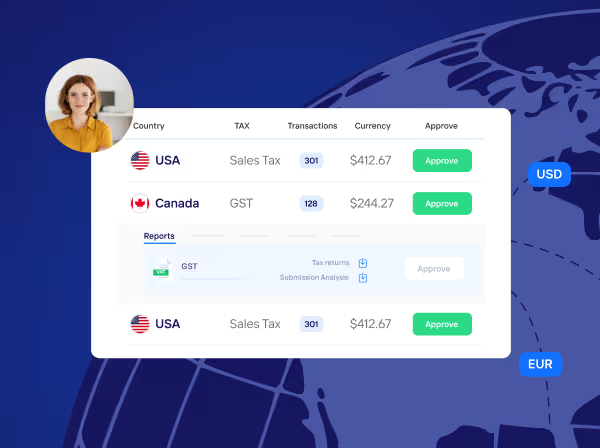
Visibility is another major benefit. Central dashboards can show:
- Current tax liabilities by country or region
- Payments that are pending, approved, or completed
- Exposure by tax type, which helps with ESG or CSR tax reporting
This type of view helps CFOs and tax leaders answer tough board questions around where taxes are paid and how that aligns with the business footprint.
How do you design a centralized tax payments operating model?
You design a centralized tax payments model by choosing its structure, its scope and the technology, data and banking setup behind it. Centralization is not one-size-fits-all. Some enterprises pull everything into group treasury. Others set up regional hubs, or keep a hybrid model where one platform coordinates payments while certain local steps stay on the ground.
When choosing scope, it helps to:
- Start with large VAT and sales tax markets where the impact is biggest
- Bring in common indirect taxes first, then consider more niche items later
- Keep very special or rare local obligations with local teams at the start
Technology, data, and banking all need to work together. A strong tax platform should be able to ingest ERP and billing data, calculate tax, and then send payment instructions in the right format and currency. On the banking side, you may work with:
- Multiple banks and payment rails
- Virtual accounts to help with tracking and reconciliation
- Automatic matching of payments back to the general ledger
Governance and change management matter as much as tools. Clear roles between tax, finance, and treasury help avoid confusion. Many teams use a RACI style model so everyone knows who prepares, who reviews, who approves, and who presses pay. Training and simple, written policies help local teams feel part of the new model, not pushed aside by it.
How do technology platforms make centralization work at scale?
Technology platforms make centralized tax payments work at scale by automating the whole tax lifecycle. Without automation, centralization can just move work from one place to another. With automation, the whole tax lifecycle becomes easier. A strong platform can:
- Pull in transaction data from multiple ERPs and systems
- Classify sales and purchases using rules
- Apply the right tax rates and logic as rules change
Rules engines and constant content updates help keep pace with frequent tax rule changes, so internal teams do not have to track every detail by hand.
Centralized payment orchestration is the next piece. Instead of each country team logging into a bank, exporting files, and updating spreadsheets, the platform can run end-to-end workflows:
- Pre-payment checks and exception flags
- Multi-step approvals based on value or risk
- Cross-border payment execution and auto reconciliation
Local expertise still matters a lot. Each jurisdiction has its own banking norms, payment references, and cut-off times. Tax calendars differ, and some authorities demand specific formats or references. Platforms like Taxually bring together local tax specialists with global technology so centralization stays safe and compliant in every market where you operate.
How can your tax payment function become a competitive edge?
Your tax payment function becomes a competitive edge when it turns into one clear, repeatable system. For many large businesses, tax payments are still a patchwork of portals, manual files, and rushed approvals. Centralized tax payments turn that patchwork into a clear, repeatable system that supports cash, reduces risk, and helps leaders see the full tax story.
At Taxually, we help enterprises review their current tax payment setup, design a central model that fits their structure, and support ongoing operations as rules and markets change. With the right mix of technology and local expertise, tax payments can move from a constant headache to a quiet strength behind your growth plans.
Simplify Global Compliance With Centralized Tax Control
Take the complexity out of multi-country VAT and sales tax management with our centralized tax payments solution. At Taxually, we help large and growing businesses gain real-time visibility, reduce manual work, and minimize compliance risk across markets. If you are ready to streamline how your finance and tax teams operate, reach out to us so we can explore the right approach for your organization. You can contact us today to discuss your needs with our team.
How Taxually handles this
Taxually’s OneTax lets you pay VAT in up to 30 countries with one bulk payment in your chosen currency, with exchange rates fixed for two weeks and a live status for every payment. It works alongside CrossTax, which prepares and files the returns.
Related guides

Frequently asked questions
How is a centralized tax payments model different from using local accountants in each country?
Centralization keeps local compliance but replaces scattered local payment processes with one coordinated, technology-led flow. Instead of many providers paying tax in their own way, the enterprise keeps control, timing, and visibility in a single model.
Will centralized payments still respect local banking rules and deadlines?
Yes. Modern platforms build in local calendars, cut-off times, and file formats. That means the central team can plan globally while still hitting every local bank and authority requirement.
What systems do we need to integrate to enable centralized tax payments?
Most enterprises connect their ERPs, billing or e-commerce platforms, and banking systems. The key is reliable, structured data feeds so tax calculations and payments can run with minimal manual work.
How long does it usually take to move to centralized tax payments?
Many enterprises start with a pilot group of countries and then expand. A phased approach lets teams refine the model, improve data quality, and build trust before rolling out to the full footprint.
Is centralized tax payment suitable for highly decentralized or acquisitive organizations?
Yes, if the model is modular. A platform-led approach can support different levels of central control and can bring new entities or recent acquisitions into the process step by step.