Key takeaways
- Centralized tax payments are not “good” or “bad” by default. They depend on timing rules, data quality, and how cash moves inside the group.
- When tax, treasury, and finance share one reliable view of obligations and balances, they can cut buffers and avoid last‑minute funding.
- Automation and a global tax compliance platform give enterprises the timing control and visibility needed for smarter liquidity choices.
In short: Centralized tax payments give enterprises control over global tax outflows, but rigid rules like always funding early can tie up cash. A smarter model keeps central tax data and rules on one global platform while payments follow local requirements. This lets treasury time tax payments to support liquidity, especially during seasonal cash peaks.
How do centralized tax payments affect enterprise liquidity?
Tax payments are usually seen as a box to tick, not a lever to pull. But when rates are higher, FX moves fast, and tax authorities ask for more real-time data, the day you send cash out the door suddenly matters a lot.
In many large groups, centralized tax payments became the standard way to stay in control. The big question now is whether that model is helping liquidity or quietly draining it. In this article, we look at how centralized tax payments affect working capital and where the real risks sit. We also show how a global tax platform like ours at Taxually can help build a model that works for both group tax and treasury.
Why did centralized tax payments become the default?
Centralized tax payments became the default as shared service centers took over finance processes. Centralization did not happen by accident. It grew as shared service centers and global business services pulled accounts payable, accounts receivable, and tax into common processes. For large enterprises, this brought order to a messy picture of local bank accounts, manual spreadsheets, and inconsistent practices.
The upside was clear:
- Fewer manual handoffs and local errors
- Stronger process control and audit trails across many countries
- Better use of banking and FX relationships at group level
As tax authorities pushed more standard formats, tighter rules, and more frequent reporting, centralization felt like the safest path. A single playbook, a single calendar, and one team in charge. But as real-time invoicing and reporting spread, that same playbook started to show strain, especially when cash got tighter and credit less friendly.
What looked like a clean control model often did not factor in the dynamic cost of cash. The choice was framed as control versus chaos, not control versus liquidity drag. That is where many groups are now starting to ask harder questions.
What is the liquidity cost of one-size-fits-all tax centralization?
One-size-fits-all tax centralization can tie up cash in the wrong place at the wrong time. When all tax payments sit in one place, it is tempting to apply one simple rule: always fund early, always hold a buffer, never be late. On paper this sounds safe. In practice it can lock up working capital across the group.
Common issues we see include:
- Group rules that fund tax three to five days before every deadline, even where banking is reliable
- Central tax accounts sitting with large idle balances while local entities borrow for payroll or suppliers
- Local teams keeping their own “just in case” reserves because they do not fully trust the central calendar
These patterns create hidden costs. Treasury may lean more on short-term lines or intercompany loans. This is not because the group lacks cash overall, but because the cash is in the wrong place at the wrong time. FX adds another layer when conversions happen earlier than needed, or hedging is set without a clear view of real payment dates per country.
There is also a risk angle. A single payment hub can be a single point of failure. If a system issue, bank problem, or process error hits around a big tax date, it affects multiple markets at once. During peak periods, such as corporate tax seasons or heavy VAT months, weak forecasting and rigid rules can suddenly turn small delays into emergency funding events.
As rates stay higher and FX swings more sharply, the cost of being “early and overfunded” keeps growing. Stakeholders are asking more questions about cash discipline, ESG-linked metrics, and how much money is tied up for comfort rather than need.
How do you design centralized tax payments for liquidity agility?
The answer is not to throw out centralization. It is to move from rigid control to smart orchestration. Instead of one fixed calendar, leading groups are building rules by country and tax type, aligned with local deadlines and real bank cutoffs.
A smarter model often includes:
- Rules for minimum lead times by jurisdiction, not one global buffer
- Clear logic for when to pre-fund and when to fund just in time
- Use of a platform like Taxually to keep calendars, rules, and local nuances current
Data and forecasting become the main edge. When ERP, tax engines, and treasury tools talk to each other, the group gets a live view of:
- Upcoming tax obligations by country and currency
- Expected cash positions at entity and group level
- The effect of shifting payment dates within allowed windows
Governance then needs to support agility without losing control. That means clear decision rights between tax, treasury, and local finance about who can adjust timing and how. Exception workflows for amended returns, delayed data, or surprise assessments help avoid ad‑hoc calls that break liquidity plans.
Automation is key here. Teams can centralize tax data and rules on a global platform while payments still follow local requirements. That way, they spend less time chasing details and more time on real funding decisions.
How do seasonality and peak cash stress affect tax payments?
Seasonality matters because tax does not hit evenly across the year. Many groups feel the crunch in the middle quarters, when corporate tax installments, VAT peaks, and heavy reporting dates collide. Seasonal industries, like retail or travel, feel it even more when tax peaks land just before or after big sales cycles.
Centralized tax payments should match these cycles, not fight them. That means:
- Adjusting funding lead times during peak stress months
- Shortening buffers when cash is tight, if operational risk allows
- Using centralized tax data to spot where local surpluses can cover other group outflows
Stress‑testing the model can expose weak spots. For example, planning a “bad quarter” with lower receipts, higher FX swings, and several large tax payments at once. This helps answer questions like:
- Do current rules push us toward heavy use of external credit in certain months?
- Are we over-funding tax just because the rules never changed with the business?
From there, many groups build a rolling 12‑month playbook that blends tax calendars, treasury forecasts, and known business events like deals or major launches. Regular review points ahead of known pressure months help fine-tune timing rules before the stress hits.
How can tax payments become a strategic liquidity lever?
When we think about tax only as compliance, we miss a large, predictable stream of cash outflows that can be shaped, within legal rules, to support the business. Small improvements in timing, data quality, and rules can add up to real working capital gains for large enterprises, especially those dealing with many currencies and tax types.
At Taxually, we see how global groups struggle to balance central control with local reality. Centralize tax data and processes, then pair that with rules-based, country-specific execution. Then centralized tax payments become part of the liquidity strategy, not just a back-office chore.
Simplify Global Compliance With Centralized Tax Management
If managing tax obligations across multiple countries is slowing your business down, we can help you streamline everything in one place. With our centralized tax payments solution, Taxually brings registrations, filings, and payments together so your team can focus on growth instead of admin. If you are ready to explore what this could look like for your business, reach out through contact us and we will walk you through the next steps.
How Taxually handles this
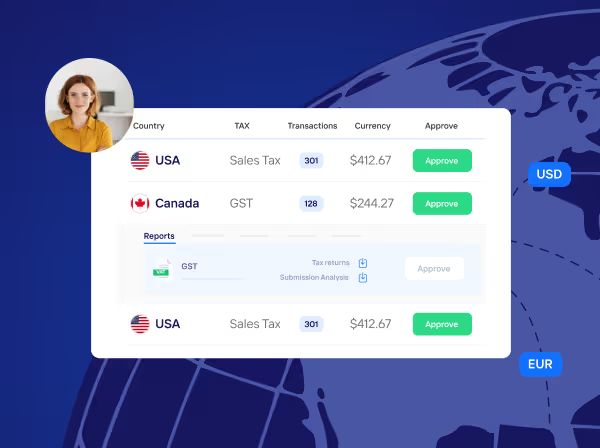
Taxually’s OneTax lets you pay VAT in up to 30 countries with one bulk payment in your chosen currency, with exchange rates fixed for two weeks and a live status for every payment. It works alongside CrossTax, which prepares and files the returns.
Related guides

Frequently asked questions
FAQs on Centralized Tax Payments and Liquidity Strategy
Q: How do centralized tax payments affect our overall cost of capital?
A: When payments are funded early in large blocks, cash leaves operations sooner and often forces more short‑term borrowing. Tighter alignment of payment timing with actual deadlines can keep money working inside the business longer and reduce interest expense.
Q: Can we improve liquidity without going back to fully local tax payments?
A: Yes. Many groups move to a hybrid model, where strategy, data, and controls are central, but timing rules are flexible by country and tax type. This keeps oversight while shrinking unnecessary buffers.
Q: What role should group treasury play in tax payment design?
A: Treasury should co‑own the timing rules with tax, bring in funding and FX views, and make sure tax calendars feed straight into liquidity forecasts. That shared ownership helps avoid surprises at peak times.
Q: How can a platform like Taxually support better liquidity?
A: A global tax platform brings together registration, reporting, and payment data across jurisdictions, then applies real statutory deadlines and local rules. This gives tax and treasury a shared view to plan payment timing with more precision and fewer manual steps.
Q: What metrics should we track to see if our centralized model is working?
A: Helpful metrics include average pre‑funding days for tax payments, forecast vs actual cash outflows for tax, usage of credit lines around tax peaks, and how often emergency funding or late payment fixes are needed.